Bring Back our Girls - Atlanta
While there are plenty of memes floating around the internet, of questionable validity, the meme below is unfortunately true:

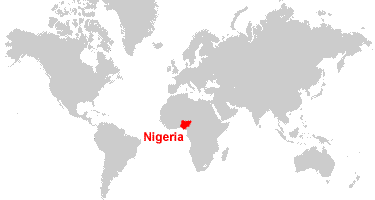
Indeed, 230 Nigerian girls were kidnapped by the militant group Boko Haram, and though weeks and weeks have passed, the girls still have not been rescued. The story is heartbreaking; imagine what those girls are going through, assuming they are still alive and well.
This story struck a chord with millions of people around the world, particularly because, once they heard about it on social media, they began to notice that many mainstream media outlets weren't reporting on it.
Lots of theories for this abounded. Was the media distracted by trending topics such as Donald Sterling, owner of the NBA team the Clippers, or the search for the missing plane in Malaysia?
Do stories like these kidnapped African girls not matter to American people? And if so, is it up to the media to decide what Americans know about and thereby what Americans care about?
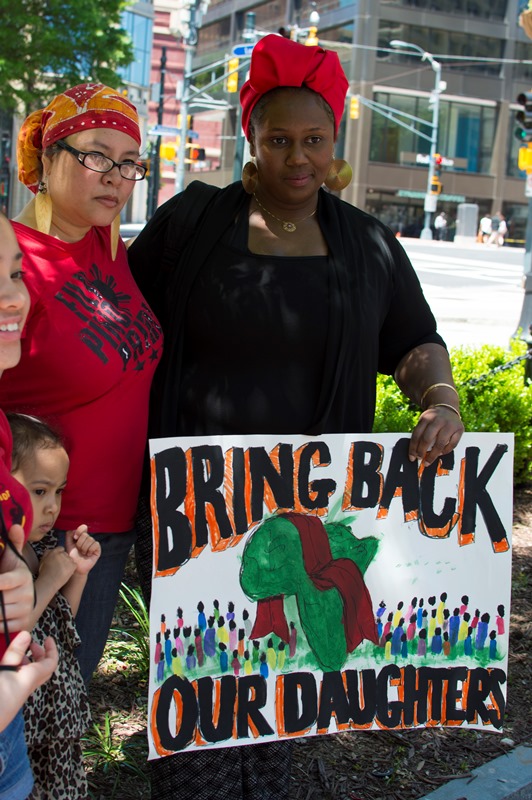
Anger at the media for failing to report the story, as well anger and fear regarding the group that kidnapped the girls, prompted many people to make their voices heard. People worldwide banded together and staged protests, demanding government action regarding the rescue of these young women.

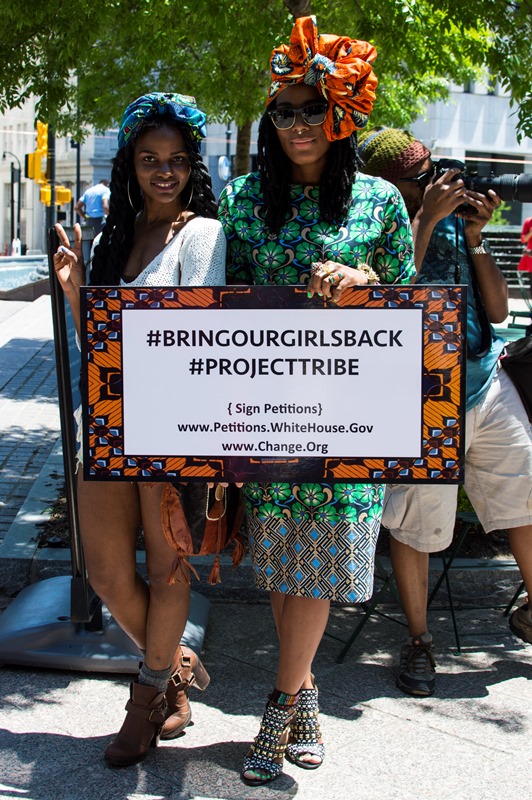
That poster shows the Twitter hashtag #BringBackOurGirls, which has been central to the mobilization around this story. You can learn more about the many developments of this story here, here, and here.
Even the First Lady to the United States Michelle Obama showed her support for the #BringBackOurGirls movement:

Here in Atlanta, a group of citizens came together to organize a gathering in support of the kidnapped girls so that their voices could be heard. The gathering took place on May 10th at Woodruff Park in downtown Atlanta.

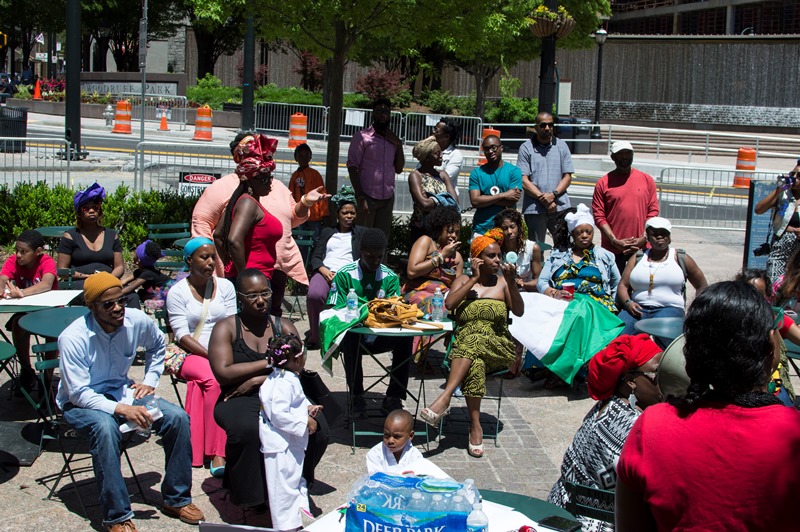
It meant something to me to attend this gathering. We can't fix everything, but we can indeed do what we can. We can all be voices for the voiceless.